POLLEN ALERT: HIGHLY ALLERGENIC RAGWEED INVADES SA
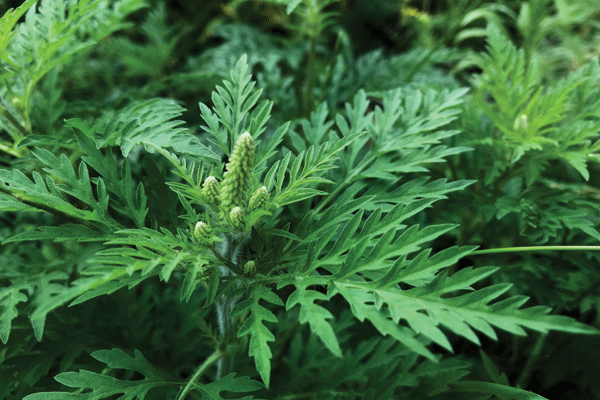
South Africa – This week scientists made a landmark discovery when ragweed, a highly allergenic weed native to North America, was detected in South African pollen spore traps for the very first time.
The discovery was made by doctor Dilys Berman, an aero biologist at the University of Cape Town (UCT) and professor Jonny Peter, who heads the UCT Lung Institute’s Allergy Unit.
Doctor Frank Neumann, a palynologist based at Wits University, has done research focusing on the impact that climate change has on vegetation. He also confirmed that the pollen grains indeed belong to the invasive Ambrosia species.
Professor Peter said while the threat of allergic plants such as ragweed has always been a concern, few expected it would show up soon.
“Ragweed is incredibly invasive, and its potent pollen has been problematic in the US for many decades. In recent years, allergy sufferers in Europe and South America have also come under threat as ragweed started to invade these areas,” he said.
“For now, KwaZulu-Natal residents are most at risk as ragweed pollen has recently been detected at the Durban monitoring site over the last few days. The counts are relatively low at this stage, but we are monitoring them daily to detect any sudden spikes. A small population of ragweed has also been found on the banks of the Vaal River near Heidelberg – about 50km away from Johannesburg, while the Eastern and Western Cape still remain ragweed-free,” he added.
“Based on historical data, ragweed thrives in hot, dry environments and produces more pollen when CO2 levels are high,” he explained.
UCT aero biologist, Dilys Berman warned that ragweed poses a serious implication for human health.
“It has been one of the most loathed weeds in the US, causing misery for 23 million Americans and it is estimated that ragweed allergy rates in Europe will increase from 33 to 77 million in the next two decades. While we have not reported sensitisation in SA yet, it is a cause for concern,” he said.
“Increasing amounts of fine-powder ragweed in SA could exacerbate hay fever symptoms and asthma for the estimated 17 million South Africans who suffer from allergies,” he added.
People who do not normally suffer from pollen allergies may still develop a sensitivity to it in the future as the weed proliferates.
Common hay fever symptoms include red, itchy and watery eyes, a runny, itchy or congested nose, post-nasal drip etc, which could irritate and restrict the airways making it difficult to breathe.
Professor Peter pointed out that because of the world’s changing climate, ragweed is projected to decline in some areas as it may over time no longer be climatically suitable to grow there.
“Either way you look at it, ragweed is on the move. Once it sprouts, it can multiply and grow up to 2 meters in height in a matter of weeks,” he said.
“Weed control boards should add it to their invasive weeds list as soon as possible if they have not done so already and removal thereof should be a priority before it becomes impossible to control,” he explained.
Some studies also suggest that ragweed poses a threat to crop health as it drains the soil and suppresses plan growth. It always be monitored carefully.
Pollen monitoring in South Africa is funded by Clicks, Twinsaver, Thermo Fischer, A. Vogel Echinaforce, Zeiss and Durand.
To expand pollen monitoring efforts, financial contributions can be made by logging on to www.pollencount.co.za. Pollen counts for South Africa can also be viewed on the same site.
Press release issued by Meropa Communications on behalf of the UCT Lung Institute, 20 January 2020.