
Balancing people, planet, and profit
Makhado – South African environmental scientists and non-profit organisations working in the conservation and social justice sector have been preparing submissions on the draft Environmental Impact Assessment report on the Musina-Makhado Special Economic Zone (MMSEZ), due on Thursday 22 October.
South African environmental law makes provisions for the public to make comments on developments to ensure that approvals to change land use have considered people, planet, and profit.
One of the objections raised is that the public participation process should not be a series of meetings in the province where people have to turn up in person, but as the impacts of this development are of national significance virtual engagements to allow broader participation is important.
The draft environmental impact assessment (EIA) describes the 8,022ha MMSEZ as two townships which will flank ‘predominantly heavy (noxious) industrial plants that produce various types of steel products’, powered by an on-site coal-based power plant.
Some of the submissions prepared have come from The Centre for Environmental Rights and the World Wide Fund for Nature in the Western Cape province and the University of the Witwatersrand, Endangered Wildlife Trust and Birdlife SA in Gauteng province. Environmentalists from the Bojanala District of North West province have also prepared inputs on behalf of the Magaliesberg Biosphere Reserve and the Wildlife and Environment Society of South Africa (WESSA).
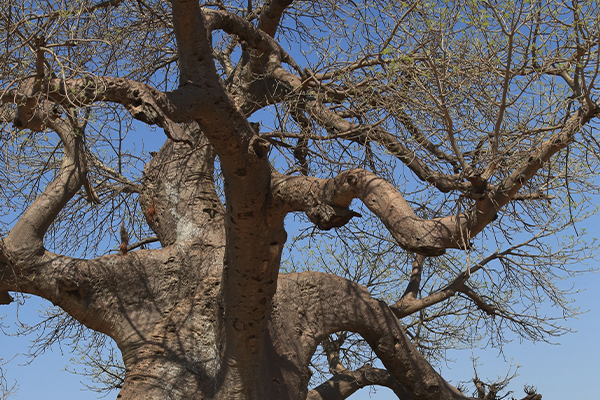
The botanical survey estimates that 5,657 baobab trees will be directly affected by the MMSEZ. Not only are these iconic trees of the Limpopo province landscape, but they have untapped socio-economic value in the organic health food industry.
Baobab specialist doctor Sarah Venter says that baobabs take 200 years before they produce fruit! In 2005 she started a company in Makhado to produce baobab products which sources directly from rural women and is an incentive to maintain natural habitats. This business has proven itself nationally and internationally and could be expanded in the Musina-Makhado area.
Baobab trees produce a fruit that can be processed into a ‘superfood’ known for its unsurpassed nutritional makeup and becoming increasingly popular on the organic food market. A secondary product is a high value cosmetic oil, known as baobab seed oil. Sarah estimates that the combined value of the baobab powder and oil that can be generated from the baobab trees on the MMSEZ site alone totals R2,800,000 per annum.
A second wild sourced product from the MMSEZ area are edible insects notably the popular mopane worm. The EIA process is supposed to document what occurs in an area so an educated choice can be made on gains and losses. In this instance, although the proposed project is in a district renowned for its edible insects, no mention is made in the 117-page report describing the Fauna and Flora of the area of edible insects. The poor quality of the insect investigation is evident as not a single termite species was mentioned in the report even though termite mounds are an unmistakable ever-present feature in the bushveld.