
Magnificent Marula
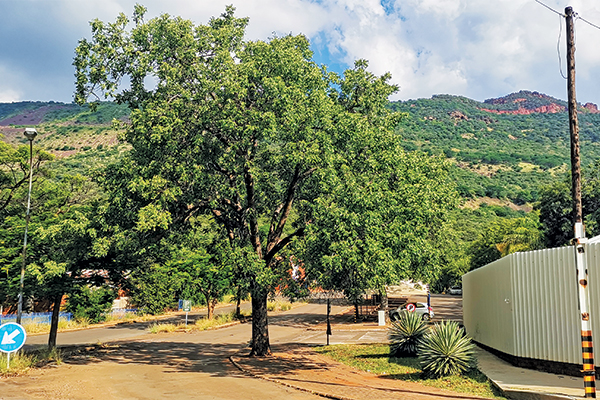
Thabazimbi – Thanks to an excellent marketing campaign linked to elephants, Amarula liqueur has made the marula tree (Sclerocarya birrea) known throughout the world.
The marula tree belongs to the same family (Anacardiaceae) as the mango, pistachio and cashew nuts. Its use probably dates to 9000BC as piles of marula stones were discovered in the Matobos caves in Zimbabwe which were inhabited by people at that time.
This deciduous tree can reach heights of 17 metres and grows in frost free areas of the bushveld and woodlands of Kwa-Zulu Natal, North West and Limpopo as well as Swaziland, Botswana, Mozambique, and Zimbabwe.
At the moment many of the marula trees are laden with fruit which vary in size and flavour. Each fruit has a single nut or stone, which contains three protein-rich edible kernels. It takes patience and skill to remove [intact] these kernels and gogo’s armed with a rock seem to know just where to hit the nut to get it out. The ripe fruits have a leathery, smooth yellow peel which covers a whitish flesh, high in vitamin C and tart in taste. The ripe fruit fall to the ground where they ferment in the sun and attract elephants, baboons, monkeys, and insects.
People collect the fruit to make traditional marula beer or a delicious jam which goes well with roasted meat or biltong. The simplest use is to peel six fruit and drop them whole in a litre of water which is chilled overnight to allow the flavour to emerge.
A local resident of Thabazimbi, who do not want to be named told the Platinum Bushvelder that he went around town and collected 10kg of marula fruit that fell off trees around town.
He let the fruit ferment in water, sugar, and rice for six weeks before distilling it in a special kettle to make mampoer. He warned that Google do not provide a fail-proof recipe for making marula mampoer and that it was better to talk to someone who had made it before. He made marula mampoer because of the pandemic restrictions on selling liquor. The oil from the kernels is also used in cooking, cosmetics, and haircare products.